
 If you’ve ever been online — which, if you’re reading this, I assume you have — you’ve probably encountered a banner advertisement or two. These typically come in the form of a prominent image on the page, although the exact size, positioning and content can differ drastically.
There’s more to creating a banner ad than just opening up a new Photoshop canvas and throwing together some pictures though. In this article, we’re going to take a look at banner advertising and investigate just what creating a strong ad is all about.
 What Are Banner Ads?
Banner ads are one of the principle forms of advertising on the web today and, for many sites, a fundamental source of revenue. The concept is simple: site owners offer up space in their design for an advertiser to fill with a banner ad in return for a fee. Much like any form of advertising, however, the success of a given campaign can be easily ruined by a bad design.
Designing a banner ad to be used on someone else's site is a different process to producing your own entire site for the same purpose. Limited space and control over positioning present challenges to the design process, but with the right planning and consideration, they don't need to impact your ad that much.
Size, Standardisation and Specification
Since the majority of banner ads are produced to be displayed on someone else's site — specifically, a site the designer doens't have design control over — adhering to the industry consensus on a number of factors is a must. When running a campaign that stretches beyond a single location, this becomes even more important.
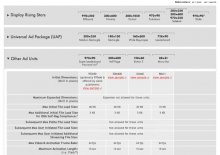
The Interactive Advertising Bureau, or IAB, maintain a specification of the standards most banner ads adhere to and this is a good starting point when planning your ad. The IAB Display Advertising Guidelines details a variety of common ad unit sizes, from large 970 x 250px Billboards to smaller 300 x 250px Sidekicks, including older, "delisted" units that are starting to be replaced.
If you already know where your ad's going to be shown and understand the sizing of that space, that's great but, if not, limiting yourself to the IAB-endorsed sizes ensures you the best chance of compatibility when you find a space.










 Zprávy